A child’s first dental visit is an important milestone in their early development. Establishing a relationship with a pediatric dentist helps parents understand their child’s oral health needs while introducing children to a positive dental care experience. At Altoona Pediatric Dental in Altoona, IA, Dr. Zach Percival emphasizes the importance of early dental education and preventive care to help families build healthy habits that can last a lifetime.
Many parents wonder when their child should first visit the dentist, especially when their baby teeth are just beginning to emerge. According to the American Academy of Pediatric Dentistry (AAPD), children should have their first dental appointment when their first tooth appears or no later than their first birthday. Scheduling an early visit allows dental professionals to evaluate oral development, identify potential concerns, and provide parents with personalized guidance on caring for their child’s growing smile.
When Should You Schedule Your Baby’s First Dental Visit?
The ideal time for a child’s first dental appointment is within six months of their first tooth erupting, but no later than 12 months of age. Although baby teeth eventually fall out, they serve essential functions in chewing, speech development, and maintaining space for permanent teeth. Early dental visits help ensure these primary teeth remain healthy throughout childhood.
Some parents assume dental appointments are unnecessary until their child has several teeth or begins preschool. However, tooth decay can develop shortly after the first tooth appears. Early childhood cavities may cause discomfort, affect eating habits, and potentially interfere with normal dental development. Establishing a dental home during infancy gives parents access to professional guidance before these concerns become more complicated.
Children who are older than one year and have never visited a dentist should still schedule an appointment as soon as practical. It is never too late to begin building a consistent preventive dental care routine, and pediatric dentists can tailor their recommendations to each child’s age and developmental needs.
What Happens During Your Child’s First Dental Appointment?
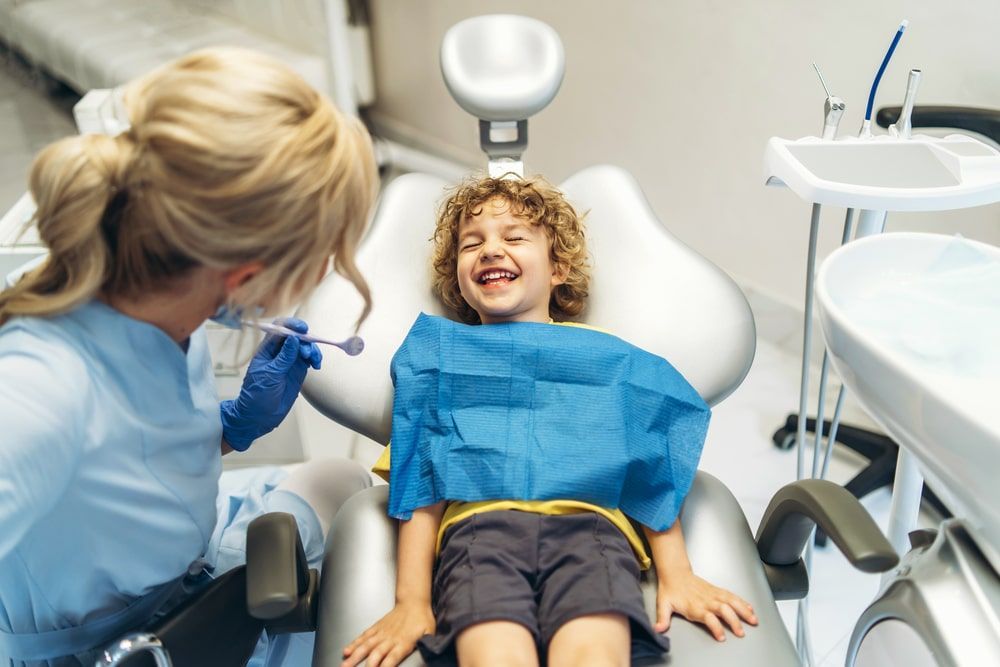
A child’s first dental visit is generally shorter and less involved than a routine appointment for an older child. The primary goal is to evaluate oral health, introduce the dental environment, and help parents understand how to care for their child’s teeth and gums. Pediatric dentists use age-appropriate techniques to make the experience comfortable and educational.
During a child’s first dental visit, the dentist may examine the teeth, gums, jaw, and oral tissues to assess development and identify early signs of decay. For infants and toddlers, the examination may take place while the child sits on a parent’s lap, helping them feel secure throughout the appointment.
Parents can also expect discussions about brushing techniques, fluoride exposure, teething, pacifier use, thumb sucking, and feeding habits. These conversations provide an opportunity to address questions about oral hygiene and learn how everyday routines influence dental health. Depending on the child’s individual needs, the dentist may also recommend preventive treatments or establish a schedule for future appointments.
How Early Dental Visits Help Prevent Childhood Cavities
Preventive dental care plays an important role in protecting developing teeth from cavities and other oral health concerns. Baby teeth have thinner enamel than permanent teeth, making them vulnerable to decay when plaque and harmful bacteria accumulate. Regular dental examinations allow providers to identify early changes before they progress into more serious problems.
Establishing a relationship with a pediatric dentist also helps parents understand how nutrition and oral hygiene influence their child’s dental health. Frequent exposure to sugary beverages, prolonged bottle use, and inadequate brushing can increase the risk of early childhood cavities. Parents can reduce these risks by introducing appropriate brushing routines, limiting sugary snacks, and following professional recommendations for fluoride use.
As children grow, routine dental check-ups and cleanings provide additional opportunities to monitor oral development and reinforce healthy habits. Most children benefit from dental examinations approximately every six months, although some may require more frequent appointments depending on their individual cavity risk and oral health needs.
Preparing Your Child for a Positive First Dental Experience
Parents can take several steps to help make their child’s first dental appointment a positive experience. Introducing dental care as a normal part of staying healthy can reduce uncertainty and encourage cooperation during future visits. For toddlers and preschool-aged children, reading age-appropriate books about visiting the dentist or practicing simple dental examinations at home can help familiarize them with the process.
Choosing an appointment time when your child is typically well-rested and comfortable may also improve their experience. Parents should avoid using frightening language about dental instruments or procedures and instead explain that the dentist will count their teeth and check their smile. Maintaining a calm, encouraging attitude can help children feel more confident about visiting the dental office.
It is also helpful to bring information about your child’s medical history, medications, feeding habits, and any dental concerns. Sharing these details allows the dentist to provide recommendations suited to your child’s development. Even if a child becomes nervous or uncooperative during their first appointment, pediatric dental professionals understand that adjusting to new experiences takes time.
Building Healthy Dental Habits From the Very Beginning
Good oral hygiene should begin before a baby’s first tooth appears. Parents can gently clean their infant’s gums with a soft, damp cloth to remove residue and establish an early oral care routine. Once the first tooth erupts, brushing twice daily with a soft-bristled, age-appropriate toothbrush and a smear of fluoride toothpaste approximately the size of a grain of rice is recommended.
As children develop more teeth, parents should continue supervising brushing and gradually introduce additional preventive practices. Children between three and six years old generally need a pea-sized amount of fluoride toothpaste, with adult assistance to encourage proper brushing and minimize swallowing. Flossing should begin when neighboring teeth touch and a toothbrush can no longer adequately clean between them.
Consistent dental care during early childhood helps children become familiar with oral hygiene and understand the importance of maintaining healthy teeth. Parents who establish positive routines early can support their child’s confidence, comfort, and long-term dental health.
Give Your Child a Healthy Start With Pediatric Dental Care
Scheduling a child’s first dental appointment by their first birthday provides an important foundation for lifelong oral health. Early examinations allow dental professionals to monitor development, identify potential concerns, and guide parents through the changing dental needs of infancy and childhood. With consistent preventive care and healthy habits at home, children can develop a positive relationship with dentistry from an early age.
At Altoona Pediatric Dental, Dr. Zach Percival and the team are dedicated to helping families in Altoona, IA, understand the importance of early pediatric dental care. Whether your child is preparing for their first appointment or continuing routine preventive visits, establishing a consistent dental care schedule can help support healthy teeth, confident smiles, and positive dental experiences throughout childhood.
Resources
1. American Academy of Pediatric Dentistry. (2025). Periodicity of Examination, Preventive Dental Services, Anticipatory Guidance/Counseling, and Oral Treatment for Infants, Children, and Adolescents. The Reference Manual of Pediatric Dentistry.
2. American Dental Association. (n.d.). Baby Teeth. MouthHealthy.
3. American Academy of Pediatrics. (2023). Maintaining and Improving the Oral Health of Young Children. Pediatrics.